
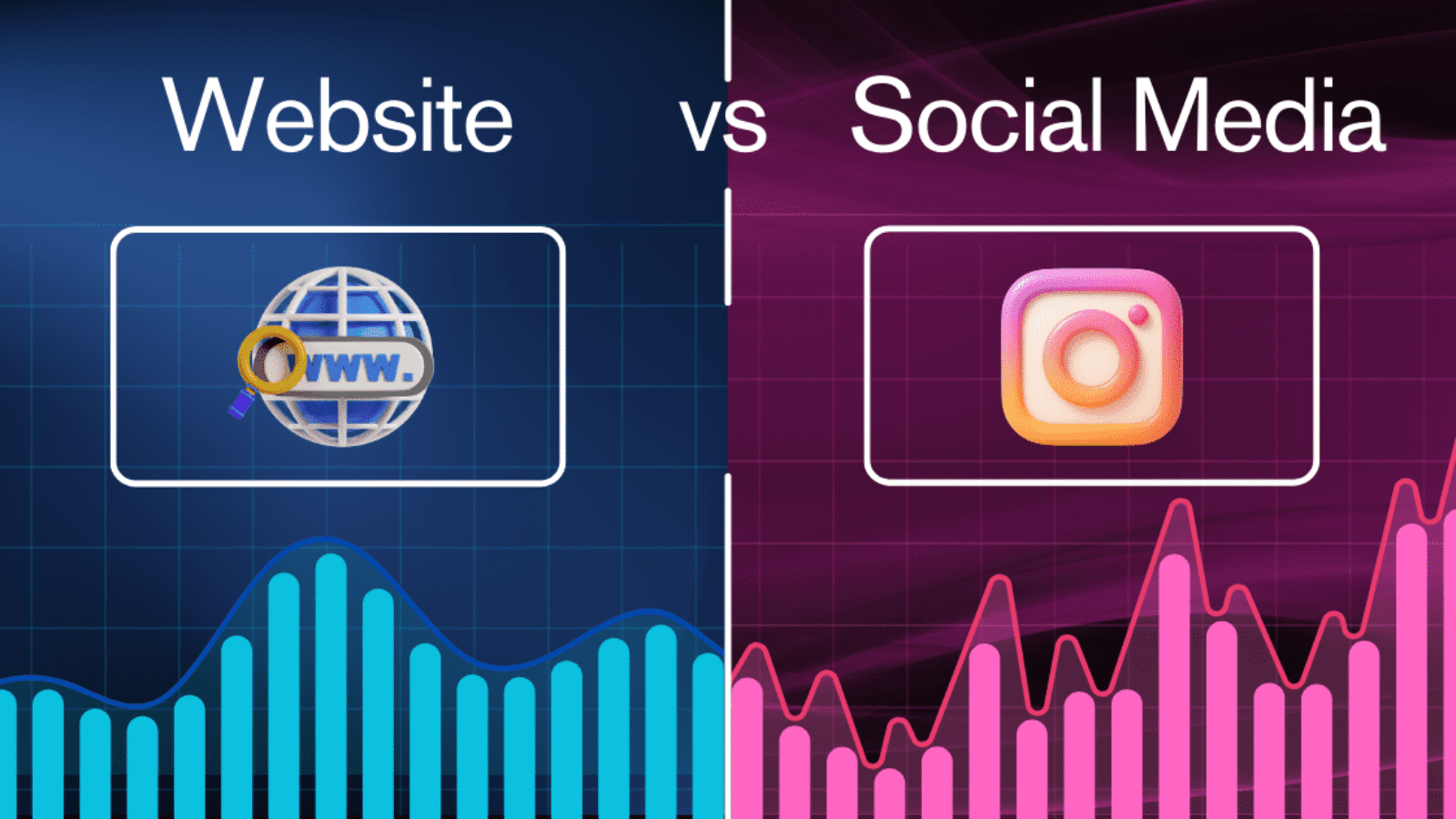
Whenever anyone thinks of starting a business these days, they begin with social media. Because it’s fast. It’s free. It feels new. You just need to set up an account, upload your logo, and start posting—and your business goes online in a second. This quick trend makes it possible for everyone to launch their business online easily.
But after a while, as your business gradually grows, a doubt also starts to grow:
“Is this enough?”
“Is all this really mine?”
“Do I really need a website?”
It’s normal to feel this way when you start thinking about greater growth and stability. But when we finally decide to take action, we face another challenge: deciding whether to spend all our time on social media platforms like Instagram or focus on building a professional website. Let’s make this clear so you can make smart choices about what to do first.
Understanding Social Media for Your Business
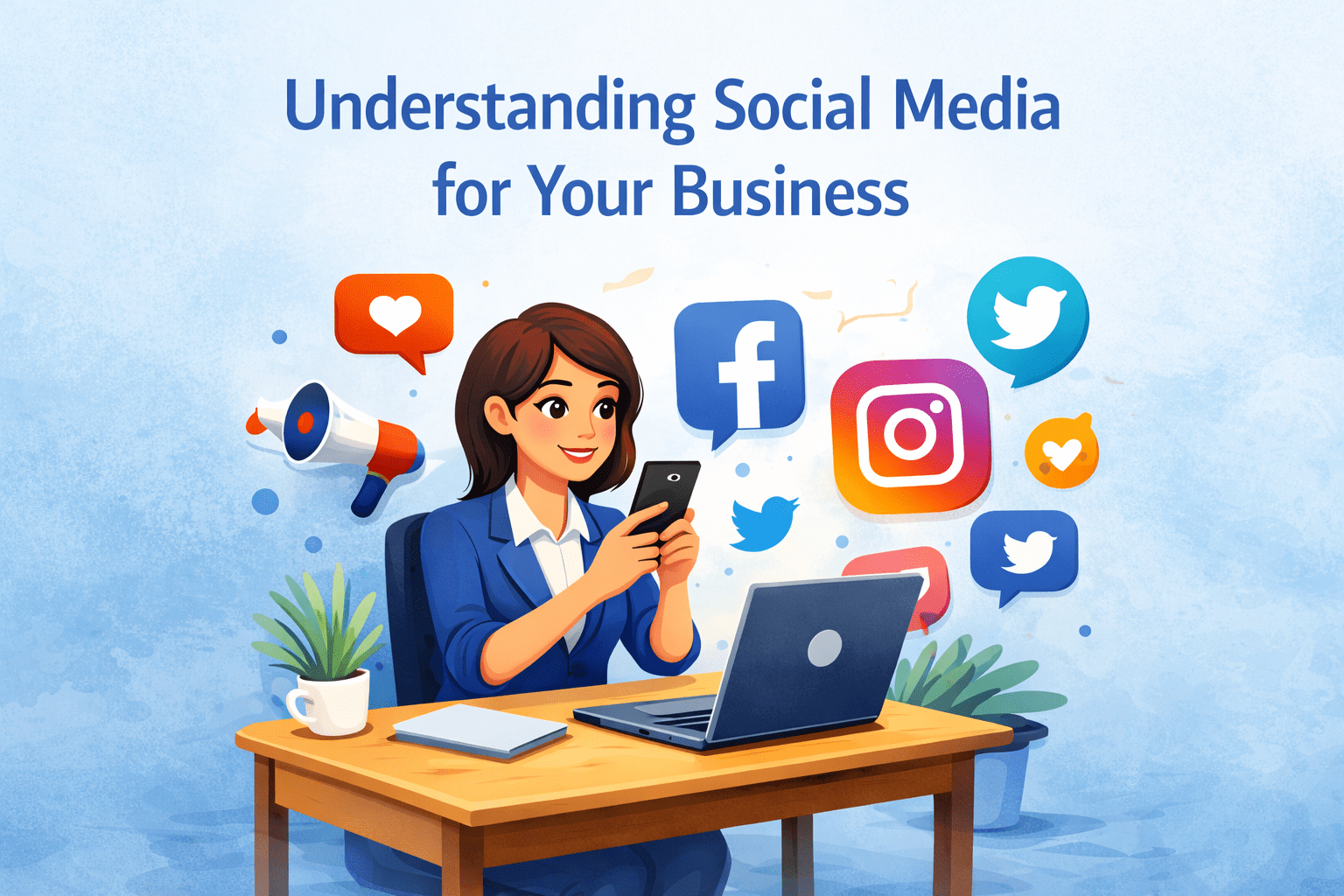
Social media is one of the easiest ways to enter the digital world and make your business visible to your audience while sitting at home using just your mobile phone. You don’t need to know anything about computers or coding. This is a crucial reason why social media boomed in the 21st century.
So, using these tools correctly is the best approach for businesses. To use them effectively, you need to understand their power in our world and how they can be a game changer for your business growth.
First of all, you don’t need to invest a lot of money to create content for your business. Most importantly, you can directly connect and engage with your audience right away, get them involved, share news, and even go viral. You can build communities and talk to customers directly on sites like Facebook and Instagram. That kind of quick feedback is very helpful.
So, most individuals use it to build their personal brand and enhance their growth.
Let’s see some benefits of social media in a quick read:
- Easy to start your business online with no complex setup
- Very beginner-friendly method that anyone can start
- Higher probability of reaching people than a website
- Can go viral at any moment and drive a massive audience
- Direct connection with your audience, making it easy to build personal bonds with customers
- Easy to connect with creators, influencers, and other businesses
- You can use reels, shorts, stories, live streams, carousels, and polls, which are great for creative marketing
- You can test ideas, offers, and designs quickly and see what people like before investing big money
But here’s the hidden problem:
- You don’t have enough information about the people who follow you.
- You can’t control the platform’s algorithm.
- You always have to follow their rules.
- You can’t fully customize what you want, which may limit your business strategy.
- Your reach can drop overnight if the algorithm changes.
- You are not the sole owner of your content. If your account is suspended, your business may no longer be visible
Social media is powerful, but that doesn’t mean you own it. This creates a high risk for serious business owners. That’s why big businesses never fully rely on social media alone. So, let’s talk about websites, which give your brand a solid and secure foundation.
What a Website Really Means for a Business
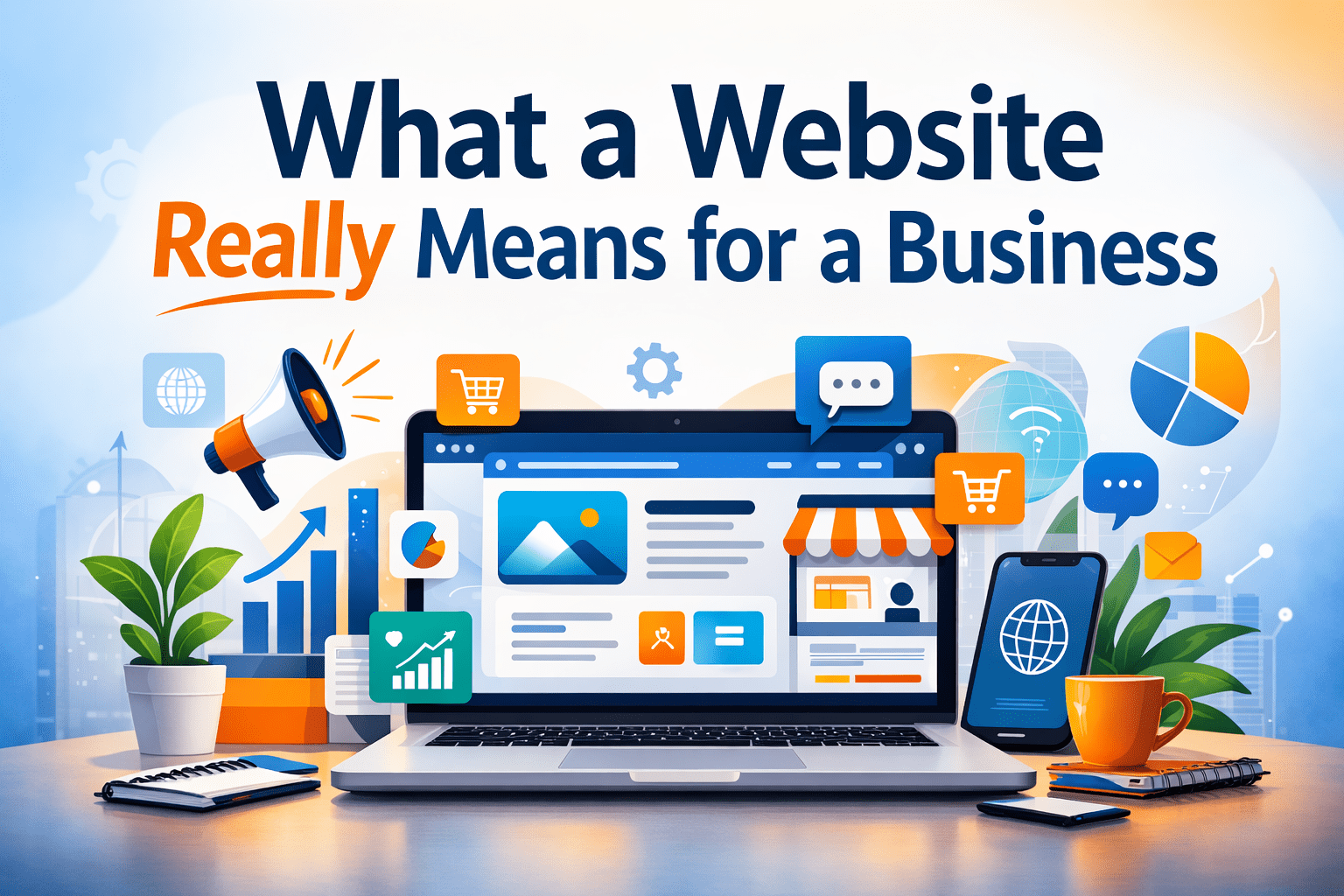
A website is different. It’s your main digital identity for your business. Most importantly, you have complete control over your site. You can freely manage branding, messaging, design, and the way customers move through it. You don’t need to worry about following fixed social media structures or platform limitations. You are the sole owner of your site, so you can customize it in any way that improves your business.
Besides control, there are other benefits to having a website for your business. A website is important because it builds trust. When someone finds your website by searching for your services on Google, it gives your brand authority. SEO is also a powerful feature that helps your website rank in Google Search, which means people can find you even when you’re not posting new content. It’s true that SEO takes time, but a website is different from social media posts that disappear after 24 hours or a few days. Website content can be discovered and consumed by audiences for years.
So yes, it requires money. Yes, it needs maintenance. But investing in a website means building long-term value and creating a permanent digital presence on the web.
Let’s quickly look at the key benefits of having a website:
- Your complete digital ownership with no platform dependency
- Full control over branding, design, and the customer journey
- Builds strong trust and professional credibility
- People can find you through Google Search (SEO advantage)
- Your business stays visible all the time and works 24/7
- Long-term content value (doesn’t disappear like posts)
- Collect customer data such as emails, inquiries, and leads
- Sell products or services without platform restrictions
- Custom features based on your business needs
- Central hub for all your marketing channels
But Websites have also hidden complexity:
- Initial cost for domain, hosting, design, and development can be a burden at first, but it becomes stable later
- Consistent maintenance is required, including updates, backups, and security checks
- It takes time to build traffic, as SEO doesn’t work overnight
- The technical learning curve for setup and management requires skills
- There are security risks, as a website can be hacked if it is not protected properly
- No instant audience, unlike social media followers
- Performance matters because slow sites lose visitors and it is bad for SEO
- Design impacts trust, as poor design can hurt credibility
Final Thought for These Two Medium
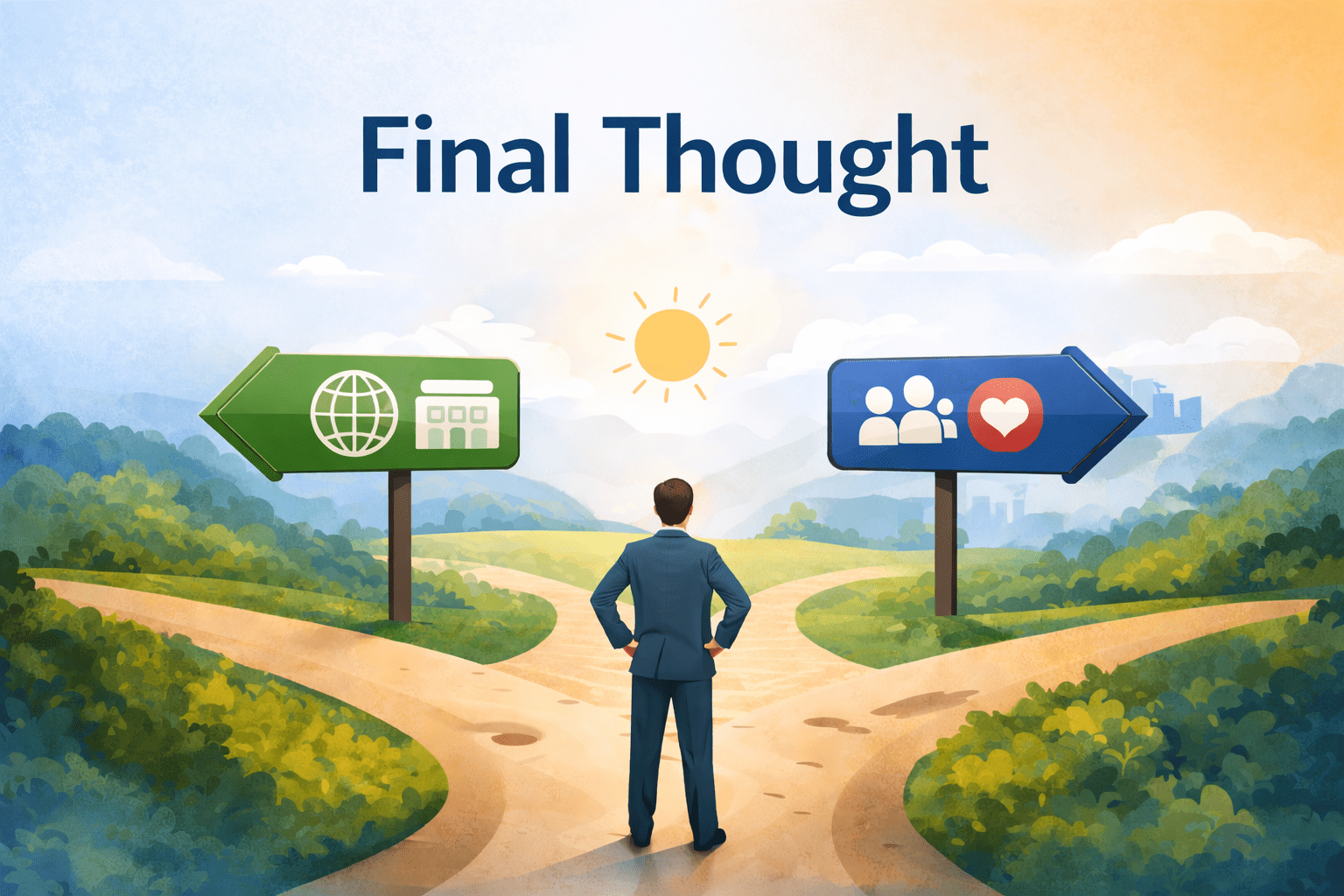
Now, most things are clear about these two types of platforms. You also surely understand the strengths and weaknesses of both. It’s clear that they are different when we look at them side by side:
- The platform owns the space on social media. You own the space if you have a website.
- You can’t control everything on social media. You have full control with a website.
- Algorithms play a big role in social media growth. Strategy and SEO are important for website growth.
- Social media is fast. Websites are stable.
- They both serve different purposes, but they don’t have the same long-term impact.
The Biggest Mistake Small Businesses Make
The worst thing you can do is rely only on social media. Many small businesses use social media platforms to build their entire presence. They don’t create a website. They don’t invest in SEO. They don’t have a central place for their services. If something goes wrong, like an account hack, suspension, or an algorithm change, growth stops right away. No backup. No digital asset. No authority built. Any serious business should be careful about that.
So What Should You Focus On?
Social media is a wise place to start if you have a very tight budget. It allows you to test your market and begin increasing your visibility.
However, investing in a professional website becomes crucial if you’re thinking long-term and want stability and sustainability. The real change happens when you stop thinking in terms of “either-or.”
The Smart Strategy—Combine Both
Big companies don’t choose between social media and websites. They combine them. Social media becomes the main source of traffic, while the website becomes a conversion tool. Social media attracts attention, and the website converts that attention into leads, sales, and inquiries.
To put it simply, social media is like a rental property. Your website is something you own. Serious brands are built on owned property.
We believe small businesses should have more than just a fleeting presence. You deserve:
- A controlled online presence
- An authority-building brand
- A system that turns traffic into growth
- Ownership that is more powerful than social media
So, the final call is this: Social media facilitates rapid growth. A website supports sustainable growth. Stability, authority, and long-term success require cooperation rather than rivalry. That’s how smart small businesses expand today.
Quick Cheat Sheet: Choosing Between a Website and Social Media
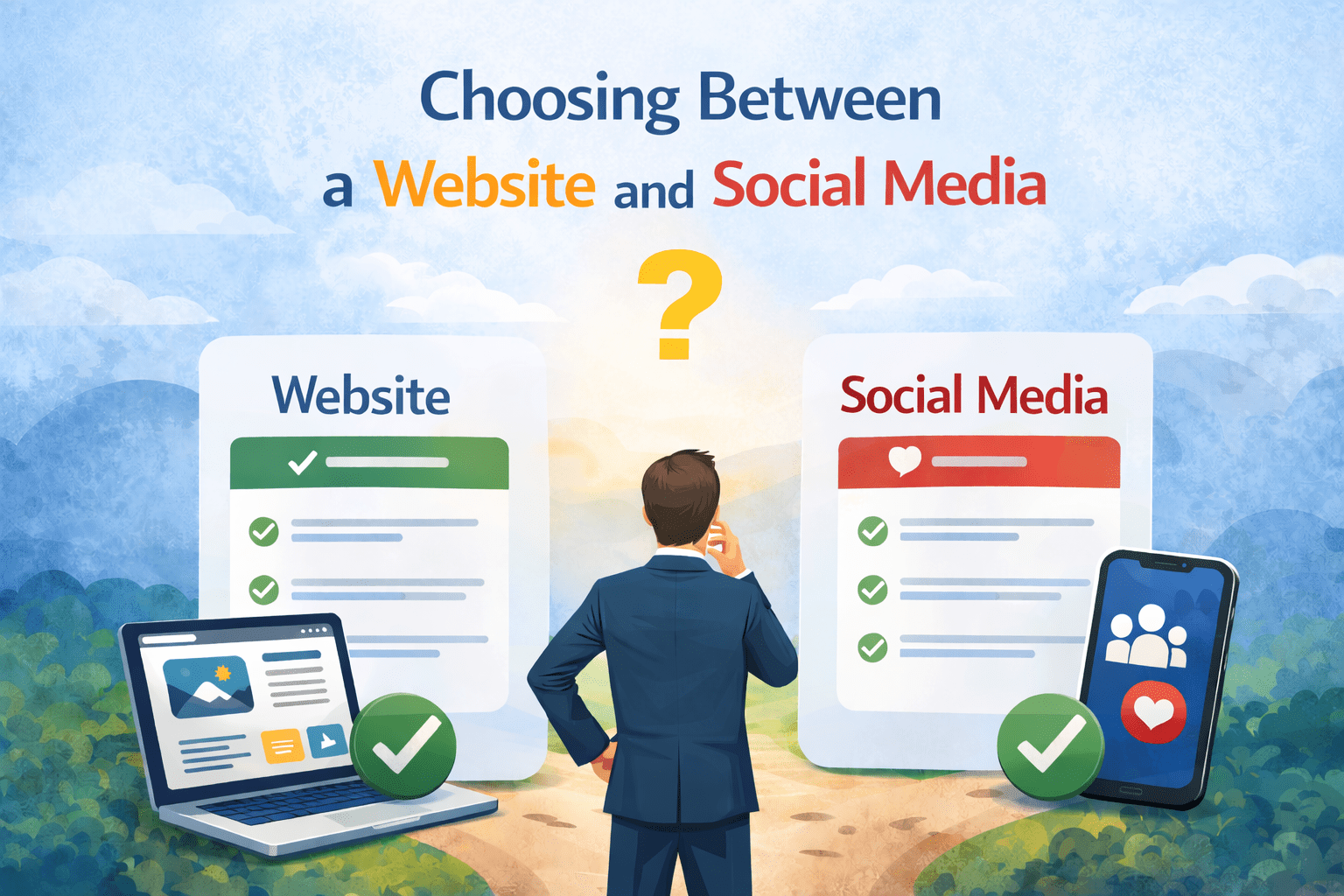
As we said repeatedly in this article, in the modern day both are important, and using them in parallel is the best decision. However, in the starting phase most people don’t have the time, money, or resources to do both. That’s why we created this cheat sheet to help you quickly choose between them. Later, you can scale according to your business needs.
Businesses Where Social Media are More Important:
Social media and its marketing are great for businesses that can grab attention through visuals, interaction, customer engagement, and real-time updates. Below is a list of businesses that can rely more on social media in their initial phase.
Service-Based Businesses
- Social Media Management & Consulting
- Freelance Content Creation (Video/Graphic Design)
- Online Coaching & Tutoring
- Virtual Assistant Services
Creative & Product-Based Businesses
- Handmade Crafts & Jewelry
- Home Bakery & Personalized Food
- Thrift Flipping & Pre-loved Sales
- Dropshipping
Content-Centric Models
- Influencer & Affiliate Marketing
- Meme Pages & Niche Communities
Hyper-Local Services
- Food Trucks & Pop-up Shops
- Home Services (Pet Sitting, Lawn Care)
Restaurants and Cafes
- Ghost Kitchens / Cloud Kitchens
- Home-Based Bakeries & Pastry Shops
- Pop-up Coffee Carts & Juice Bars
- Weekly Meal Prep & Delivery Services
Beauty and Personal Care Services
- Mobile Barbers & Hair Stylists
- Freelance Makeup Artists
- Traveling Lash & Nail Technicians
- Virtual Skincare Consultants
Local Retail Shops
- Curated Vintage & Thrift Resellers
- Niche “Drop-Style” Boutiques
- Sneaker & Streetwear Resale
- Subscription Box Curators
Artisans and Craftsmen
- Custom Jewelry Makers
- Handmade Pottery & Ceramics
- Hand-poured Candle & Soap Makers
- Commission-based Illustrators & Artists
Fitness and Wellness Instructors
- Virtual Yoga & Pilates Studios
- Outdoor Bootcamps & Run Clubs
- Online Personal Training & Nutrition Coaching
Event Planning and Entertainment
- Luxury Picnic & Micro-Event Stylists
- Social Media Wedding Content Creators
- Niche Party Decor & Balloon Artists
- Freelance Event DJs & Performers
Businesses Where a Website is More Important:
A website acts as a stable and professional hub for comprehensive information, transactions, and services. That’s why businesses that demand credibility, detailed insights, and a structured online presence must have a website. Below is a list of such businesses:
Professional Services
- Legal Firms & Attorneys
- Accounting & Tax Services
- Business & Management Consulting
- Marketing & Advertising Agencies
Healthcare and Medical Providers
- Doctors & Specialists
- Dentists & Orthodontists
- Therapists & Psychologists
- Medical Clinics & Diagnostic Labs
E-commerce and SaaS
- Scaleable Online Retail Stores
- Subscription Box Companies
- Software-as-a-Service (SaaS) Platforms
- B2B Industrial Suppliers
Educational and Training Services
- Accredited Online Schools & Colleges
- Corporate Training Providers
- Tutoring & Test Prep Centers
- Certification Programs
Real Estate and Property
- Real Estate Agencies & Brokerages
- Property Management Firms
- Mortgage & Lending Companies
- Commercial Leasing Agencies
Finance and Insurance
- Banks & Credit Unions
- Investment & Wealth Management
- Insurance Carriers & Brokers
Hospitality and Travel
- Hotels, Resorts & Lodging
- International Travel Agencies
- Airlines & Transportation Hubs
Construction and Trades
- General Contractors & Home Builders
- Architecture & Engineering Firms
- Interior Design Studios
Community and Non-Profit
- Charitable Organizations & NGOs
- Government Agencies & Utilities
- Religious & Community Centers
If you’re serious about long-term growth, think about more than just posting. Ownership is strategic, while posting is merely temporary. Real businesses are built on foundations you control, systems that turn attention into trust and trust into revenue, not just on borrowed platforms.
When you develop something that is genuinely yours, such as a compelling brand identity, a well-organized website, a clear message, and a purposeful customer journey, you stop relying on algorithms and start building long-term equity.
Social media can help you reach a wider audience, but it shouldn’t be your company’s sole focus. If you want to grow sustainably, focus on assets that increase in value over time, platforms you own, and an online presence that supports you even when you’re not online.
Add a Comment